How to Safely Run a Generator During a Power Outage
Generators are easy to run, but there are still a…
The sizing of a generator is the single most important detail you have to get right. A generator can only perform as expected when it’s sized to handle the specific demands you’ll put on it. Whether you’re a homeowner trying to keep the lights on during an outage or a business owner who can’t risk losing thousands of dollars of refrigerated product, a generator can give you peace of mind and comfort, but only when it performs as expected.
Sizing a generator incorrectly is a common mistake because the process is so complex. Additionally, generators are rated in kilowatts (kW), but most property owners are more familiar with kilowatt hours (kWh), and often confuse the two. KwH is totally irrelevant when sizing a generator. Instead, focus on these factors:

List every appliance, light fixture, and electrical device you want or need to use during a power outage. Separate the list based on whether the device will run constantly or turn itself on, or whether you can control it and use it sparingly. For example, your air conditioner or heating system is likely to fall into the constant/self-starting category, while a blender or hair dryer would fit into the second category.
You don’t have to list every appliance or item in your home. If you know you can go without some systems or devices in an outage, leave them off. Just make sure they’re disconnected or switched off to avoid overloading your generator.
Check the appliances or devices on your list and verify their power or running watts. This detail is usually listed on most devices, but if you can’t find it, consult the manual, contact the manufacturer, or use a watt measuring plug to get an estimate.
Running watts can vary greatly between appliances. For example:
Don’t just use wattage estimates found online (such as in this article). Get accurate information directly from your appliances and items as much as possible for a realistic load. Adding the running watts of these items will help you determine the wattage requirements for your generator.
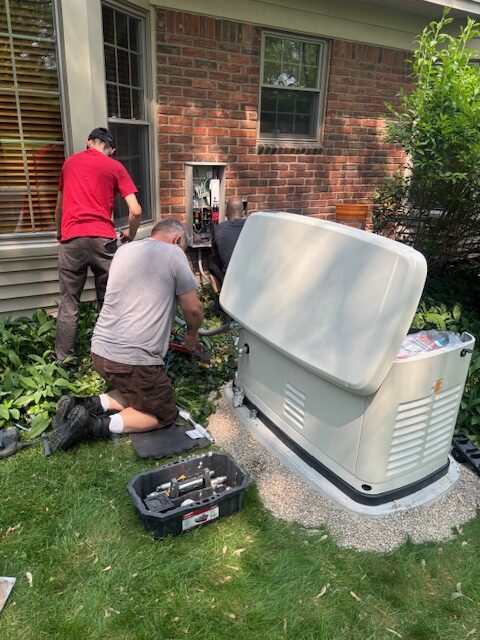
Permanently installed whole-home or whole-business generators tend to provide a seamless power supply. This means they’re generally sized to accommodate the entire property’s power demand rather than just a few limited appliances or systems. You can’t really enjoy a seamless transfer switch experience with little to no power interruption from an undersized generator.
The power will still go out if the generator isn’t sized to handle the sudden load. If you want to use a manual transfer switch for a permanent generator, you can still choose a lower power rating because you can verify which loads will turn on and contribute to demand before activating the system.
Commercial properties need uninterrupted, continuous power supplies. Permanent generators are capable of providing this much power, even if the demand is measured in megawatts. Homeowners often overestimate their actual need for the entire house to keep working the same during an outage. You can likely adjust to alternative heating sources, reduce A/C use, or eliminate most electrical entertainment sources to save money.
Don’t automatically assume that every single electrical device and appliance in your home has to remain ready to use just because the power is out for a few hours. However, if you live in an area with long-term outage risks, the need to power your entire property is worth the expense.
As we touched on earlier, sizing a generator isn’t a matter of finding out how much you use over the course of a month. You may need very little kilowatt power at night, then a bunch when cooking or bathing because you’re using multiple high-demand appliances. These patterns are similar in most commercial environments, with lower demands over the night and peaks during the mornings and evenings. The electricity bill shows averages per day, but not peaks. Using other tools, such as watt-measuring plugs or manual calculations, is essential for finding the average watts needed at any given time to power your appliances.
The value of generator sizing calculators really depends on the complexity of the tool you use. If you can enter manual details like the actual running watts required by your appliances, you’ll get pretty close to the total power needed. Generalized calculators that assume average power use by category or appliance type produce inaccurate results, making it harder to choose the right generator. A professional assessment completed by a generator technician or a licensed electrician is the most accurate way to get an exact quote on power requirements.
If you’re not sure what size generator you need, don’t guess. Turn to our experts at Budget Electric. We can help you select the right model, provide fast and reliable installation services, and maintain it annually.
Get started today by requesting a free estimate.